
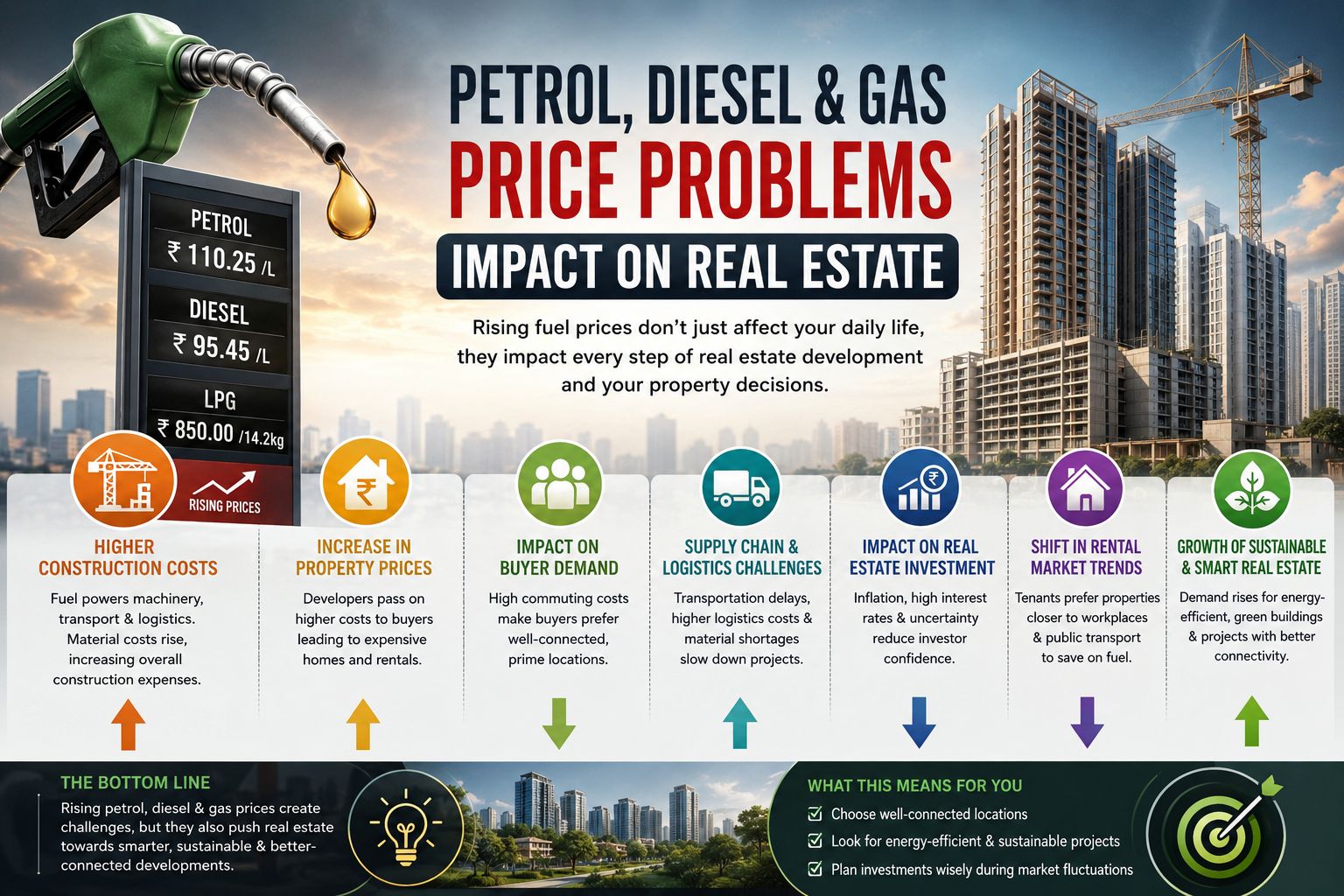
Rising petrol, diesel, and gas prices do not only affect household budgets — they also create a major impact on the real estate industry. From construction costs to property demand, fuel price fluctuations influence almost every stage of the real estate ecosystem.
For investors, developers, and homebuyers, understanding this connection is important in today’s changing economic environment.
⸻
- Increase in Construction Costs
Real estate construction depends heavily on transportation and machinery.
- Diesel powers trucks, cranes, excavators, and construction equipment.
- Petrol and gas are used in transportation, manufacturing, and logistics.
- Cement, steel, bricks, tiles, and other materials become more expensive when fuel prices rise because transportation costs increase.
As a result, developers face higher project costs, which often leads to:
- Increased property prices
- Delays in project completion
- Reduced profit margins
⸻
- Higher Property Prices for Buyers
When developers spend more on construction and logistics, the additional cost is usually transferred to buyers.
This means:
- Apartments become more expensive
- Rental rates may rise
- Maintenance charges can increase
Middle-class buyers are affected the most because affordability decreases during periods of high fuel inflation.
⸻
- Impact on Housing Demand
High petrol and diesel prices increase daily commuting expenses.
People begin to prefer:
- Homes near workplaces
- Properties close to metro stations
- Integrated townships with schools, offices, and markets nearby
This changes buyer preferences and increases demand for well-connected locations.
In cities like Lucknow, projects near expressways, metro routes, and commercial hubs often gain more attention during periods of fuel price volatility.
⸻
- Growth of Smart & Sustainable Real Estate
Fuel and energy concerns are pushing the market toward sustainable development.
Modern buyers now look for:
- Green buildings
- Solar energy systems
- EV charging infrastructure
- Energy-efficient apartments
- Walk-to-work communities
Developers who focus on sustainability gain a competitive advantage in the long run.
⸻
- Impact on Real Estate Investment
When fuel prices remain high for a long period:
- Inflation increases
- Interest rates may rise
- Investors become cautious
This can slow down:
- New property purchases
- Commercial expansion
- Luxury real estate demand
However, affordable housing and strategically located projects may continue to perform well.
⸻
- Logistics & Supply Chain Challenges
Real estate depends on continuous movement of materials from factories to project sites.
Fuel price hikes can create:
- Transportation delays
- Supply shortages
- Increased warehousing expenses
- Contractor budget pressure
Large infrastructure and township projects are especially vulnerable to these challenges.
⸻
- Rental Market Effects
Tenants also feel the pressure of rising fuel prices.
Many people shift toward:
- Renting closer to offices
- Shared accommodation
- Public transport-connected areas
This can increase rental demand in prime urban locations while reducing demand in poorly connected outskirts.
⸻
Conclusion
Petrol, diesel, and gas price problems have a deep impact on the real estate sector. They influence construction costs, buyer affordability, investment decisions, and location preferences.
At the same time, these challenges are encouraging the rise of smarter, greener, and more sustainable real estate development.
For developers and investors, the future lies in creating projects that reduce dependency on fuel through better planning, connectivity, and energy-efficient infrastructure.
⸻
By Realty Identify
Discover spaces that define you.